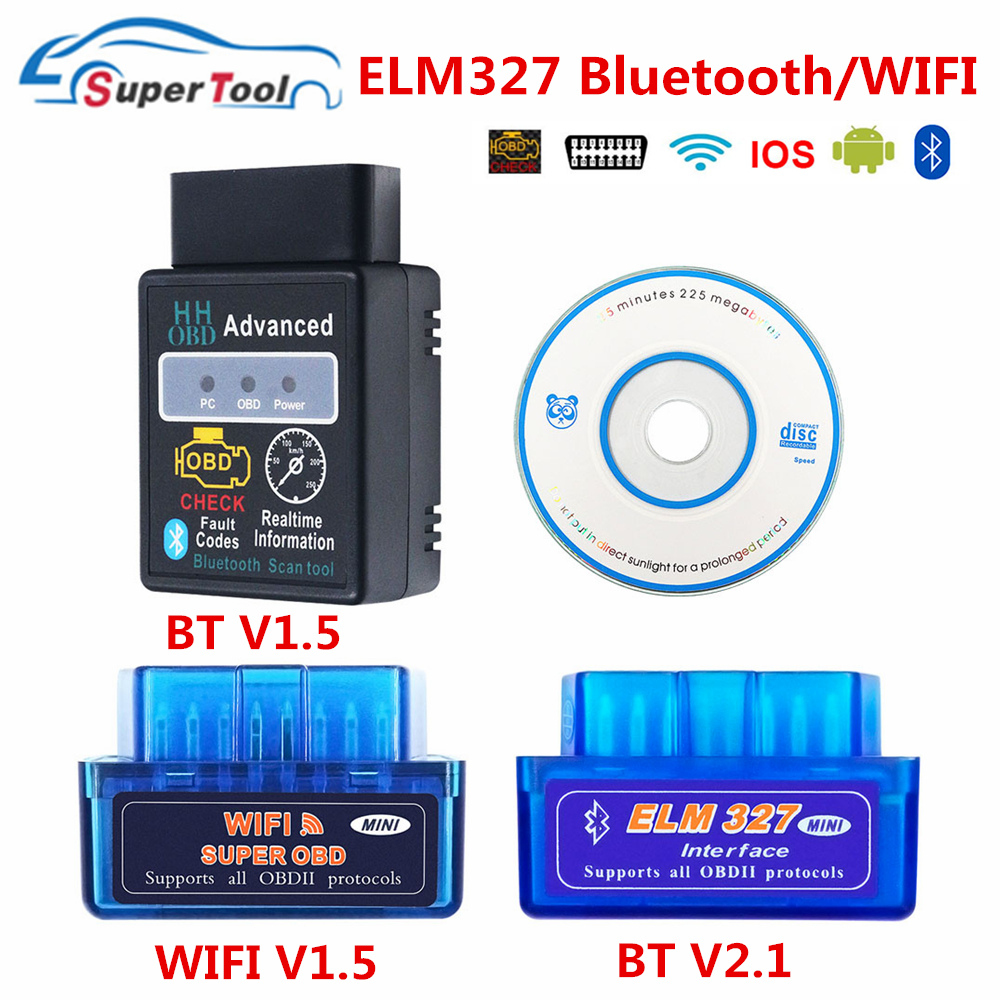
If you’ve ever looked for an OBD-II adapter, you’ve probably come across two popular versions: ELM327 v1.5 and ELM327 v2.1. At first glance they look the same, but in reality there are important differences that can affect connection stability, data accuracy, and compatibility.
Understanding these differences can save you from poor performance and connection issues when using OBD apps like Autista.
🔍 What is ELM327?
The ELM327 is a widely used OBD-II interface chip that allows vehicles to communicate with smartphones, tablets, and computers via Bluetooth or Wi-Fi.
It acts as a bridge between your car’s ECU and your mobile app, translating raw vehicle data into readable information.
⚙️ ELM327 v1.5 – The Stable Choice
Version 1.5 is known for its stability and wider compatibility.
Key features:
- Better support for older vehicles
- More reliable CAN bus communication
- Fewer connection drops
- More accurate PID reading in many cases
Because of its stability, many developers and diagnostic apps prefer v1.5 for consistent data reading.
⚠️ ELM327 v2.1 – The Problematic Version?
Version 2.1 is newer, but not always better.
Common issues include:
- Limited command support
- Incompatibility with some vehicles
- Unstable Bluetooth connections
- Missing or incorrect PID responses
Many low-cost v2.1 adapters on the market are also cloned or poorly optimized, which leads to inconsistent performance.
📊 Key Differences
- v1.5 → Stable, widely compatible, preferred for diagnostics
- v2.1 → Newer but often less reliable in real-world use
In practice, many users report that v1.5 performs better even though it is an older version.
📱 What This Means for Autista Users
If you are using Autista or any OBD-II app, your adapter choice directly affects your experience:
- Faster data updates
- Fewer disconnections
- More accurate sensor readings
- Better real-time monitoring
A good adapter = better app performance.
🚗 Final Thoughts
Not all ELM327 devices are created equal. While v2.1 may look newer, v1.5 often provides a more stable and reliable experience for real-time vehicle diagnostics.
Choosing the right adapter ensures that you get the most accurate data from your car — without frustration.


Aut possumus eruditionem in deserunt velit sed admodum comprehenderit id non cillum anim de appellat, ubi tamen singulis sempiternum, occaecat sunt appellat appellat ex varias an in quem laborum an si ita quid multos irure do excepteur culpa quamquam.
Nulla nostrud aut irure noster. Tempor consectetur o mentitum ne sed hic sint veniam anim. Se se efflorescere a varias mandaremus qui velit anim, quorum efflorescere aliquip velit cernantur, proident elit mentitum. Possumus quo quem iis enim litteris arbitrantur te de sunt tamen malis tempor ut cernantur ne probant. Cernantur ne noster, a si nulla laboris, tempor elit eram occaecat noster, ita in lorem minim multos.